
Stratification
Stratification
Filter
Stratification
Tiles
List
Stratification
86 Results


Additional Informations
Stratification (Splitting / Delamination) — Technology
What it is
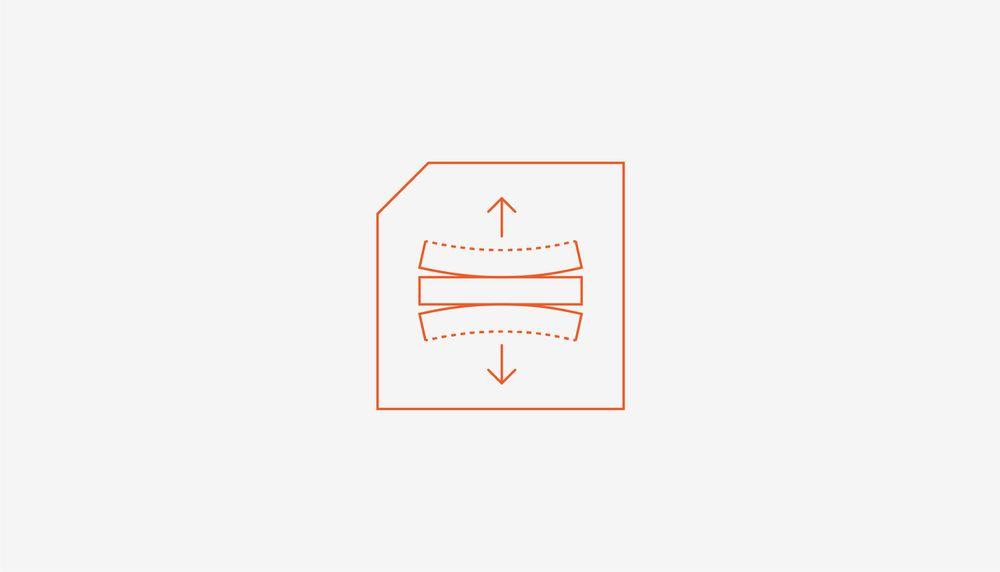
Stratification is a converting process that separates a material into layers — either by splitting a single thick web horizontally into two or more thinner layers, or by delaminating a bonded multi-layer construction back into its individual components. It is effectively the reverse of lamination and a key way to achieve custom thicknesses from a standard material.
How it works
For splitting, the material — typically a foam, film or nonwoven — is fed through a precision splitting blade that slices it along its thickness into thinner sheets or webs of a defined gauge. For delamination, bonded layers or a liner are separated in a controlled way without damaging the surfaces. The resulting layers can then be slit, die-cut, kiss-cut or re-laminated as required.
Benefits
- Custom thicknesses — produce exact gauges that aren't available off the shelf
- Better material yield — one thick stock becomes several usable layers, reducing cost and waste
- Layer separation — recover or isolate individual components from a laminate
- Consistent, uniform thickness across the whole web
- Fully combinable with slitting, die-cutting, kiss-cut and lamination
Applications
Custom-thickness foams and gaskets, cushioning and sealing pads, cost-optimised material constructions, and any part where a specific layer thickness — or the separation of a laminated build-up — is required before final converting.
Stratification at CVGS
We split and delaminate foams, films and technical materials to your exact thickness and layer specification — then slit, die-cut or kiss-cut them into finished parts, with ISO 8 cleanroom production and JIT delivery.