
Electrical conductivity

Electrical conductivity
Filter
Electrical Conductivity

Additional Informations
What it is
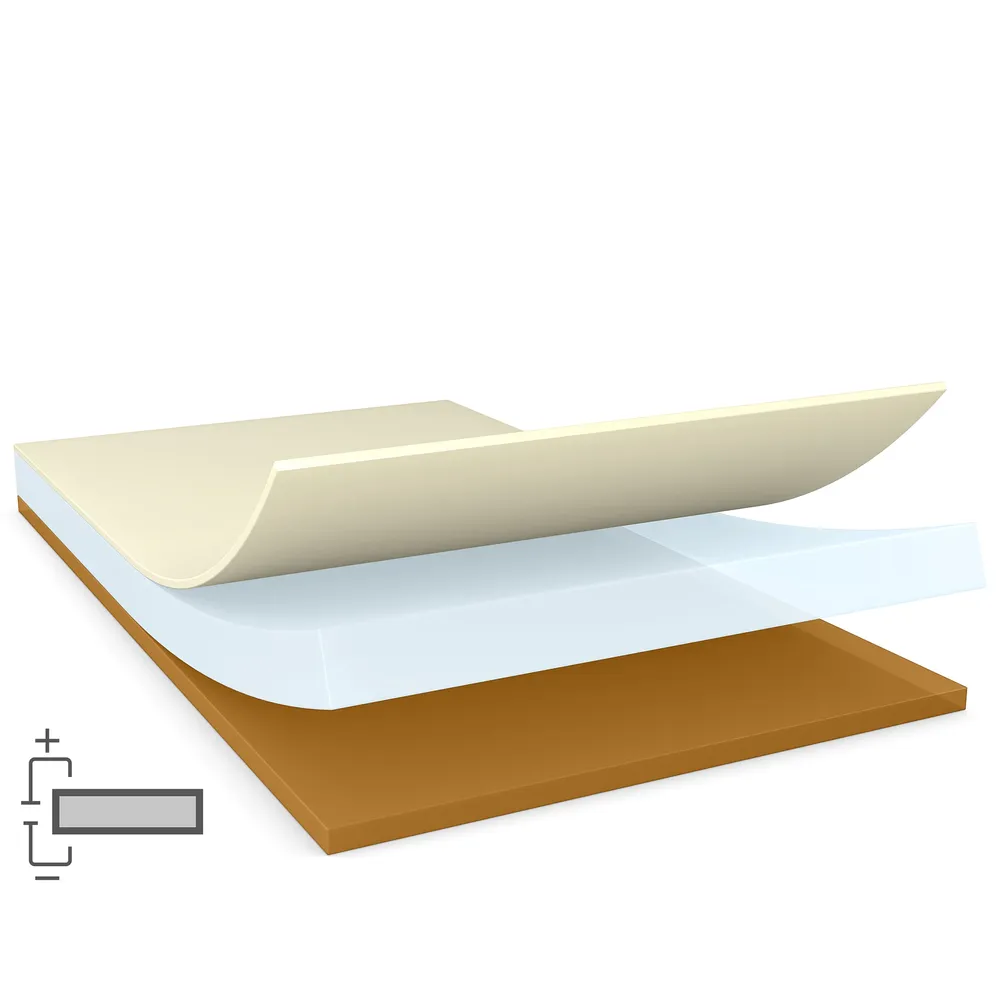
Electrical conductivity is a material function in which a tape, foam or film is engineered to carry electrical current or provide a defined electrical path between two surfaces, rather than insulating them. These electrically conductive materials bond components while at the same time creating a reliable electrical connection, grounding path or shielding contact.
How it works
Conductivity is achieved by adding conductive fillers or layers — such as conductive (filled) adhesives, metal foils (aluminium, copper), metallised fabrics or carbon-loaded materials. Conduction can run through the thickness (Z-axis), along the surface (X-Y plane), or both, depending on the construction. This lets a single part both hold the assembly together and close an electrical circuit, dissipate static, or bond an EMI shield to ground.
Benefits
- Bonding and conduction in one part — mechanical fixing plus an electrical path
- Reliable grounding and low, stable contact resistance
- EMI/RFI shielding contact — connects and grounds shielding layers
- Static (ESD) dissipation — protects sensitive electronics
- Clean, thin, conformable alternative to solder, screws or clips; often die-cuttable to shape
Applications
EMI/RFI shielding and grounding, flexible printed circuits and display assembly, antenna and sensor connections, battery and e-mobility modules, ESD-sensitive electronics, and any joint that must be both bonded and electrically connected.
Electrically conductive materials at CVGS
We supply and convert electrically conductive tapes, foils and fabrics — Z-axis or surface-conductive — die-cut, kiss-cut or slit to your exact shape and tolerance, with expert selection of the right conductivity type for your grounding, shielding or ESD application, plus ISO 8 cleanroom production and JIT delivery.